

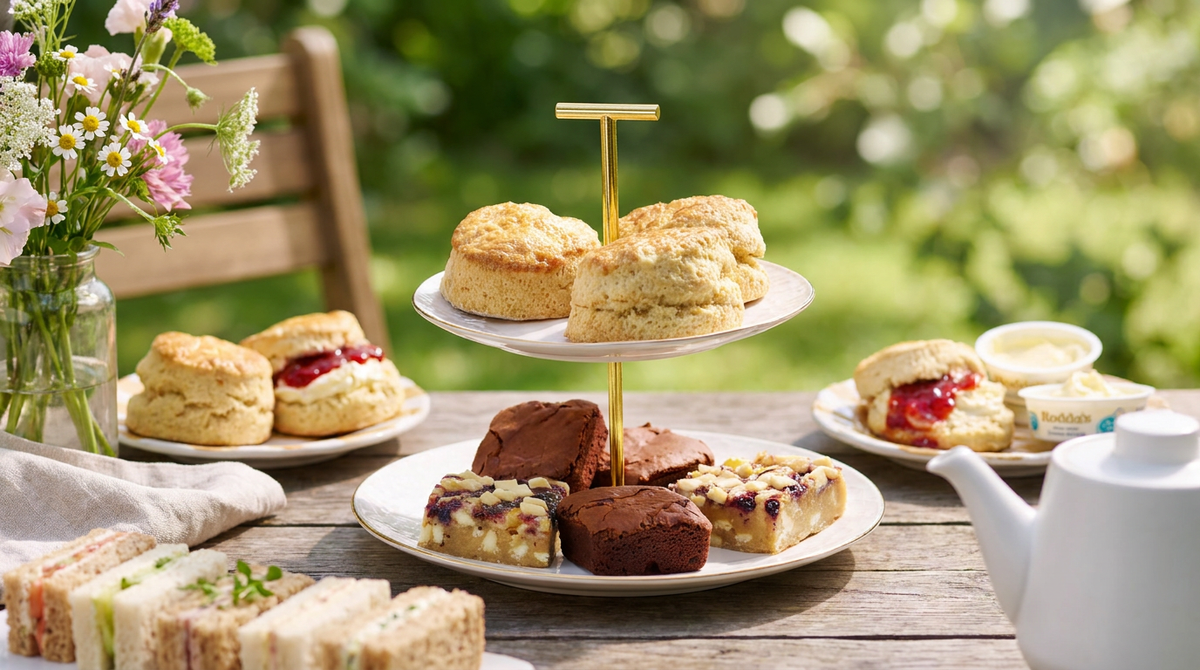
Afternoon Tea Week runs from 10 to 16 August, and it always brings out the same handful of questions. People want to know which tier to start with, whether the milk goes in first, and whether picking things up with your fingers is actually allowed. The good news is that afternoon tea etiquette is far more relaxed than most people expect, and once you know the basic order of things, there's genuinely nothing to worry about.
This guide answers the questions people actually search for, rather than repeating the usual tips on hosting a tea party. Whether you're treating yourself to a lazy Saturday afternoon or laying the table for guests, these are the small, comforting details that make afternoon tea feel effortless rather than intimidating.
Where Afternoon Tea Etiquette Actually Comes From
Afternoon tea is often credited to Anna, the seventh Duchess of Bedford, who grew hungry in the long gap between lunch and a late Victorian dinner sometime in the 1840s. She started asking for tea, bread and butter, and a little cake to be brought to her room in the afternoon, and the habit soon caught on among her friends. It didn't take long for a private snack to turn into a proper social occasion, complete with its own table settings and unwritten rules.
Many of the etiquette points that survive today, from tiered stands to the order of savoury and sweet, grew out of practical Victorian dining habits rather than any strict code of manners. That's worth remembering whenever afternoon tea starts to feel a bit formal. At its heart, it has always been about slowing down for an hour with good food and good company, and everything else is really just detail.
What Goes on Each Tier of an Afternoon Tea Stand
A traditional afternoon tea stand has three tiers, and each one has its own place in the order of eating. Getting this right is less about strict rules and more about letting your palate move gently from savoury to sweet.
The Bottom Tier: Savouries First
The bottom tier holds the savoury items, usually finger sandwiches such as cucumber, egg mayonnaise, or smoked salmon. It sits closest to the table, which is also why tradition says to start there. Working through the savouries first keeps your palate fresh enough to enjoy their delicate flavours properly, rather than dulling your taste buds with sugar before you've even got going.
The Middle Tier: Scones
Scones live on the middle tier, next to the jam and clotted cream. For a lot of people, this is the bit they've been waiting for all along. A good scone should be light and slightly crumbly with a golden top, so it's worth taking your time here rather than rushing straight to the cakes.
The Top Tier: Cakes and Sweet Treats
Last but never least, the top tier is for cakes, pastries and other sweet treats. By the time you reach it, your appetite has been eased in gently rather than overwhelmed all at once, and there's no rule about what to try first. This tier is simply for enjoying at your own pace.
Tea First or Milk First? Solving Afternoon Tea's Oldest Debate
This is probably the most searched afternoon tea question of all, and it has genuinely divided opinion for centuries. Milk was traditionally added first in households with cheaper porcelain, since pouring hot tea straight into a delicate cup could crack it. Cold milk first offered some protection, whereas finer bone china could handle the heat of tea poured directly in.
Because of this, tea first became linked to quality china and, by extension, to wealth and status, while milk first was seen as a more practical, working-class habit. Today, most etiquette experts favour tea first, mainly because it lets you see the colour and judge exactly how much milk to add. There's also a small practical benefit for flavour, since pouring milk into hot tea rather than the other way round is thought to affect how evenly it blends as the tea cools.
That said, there's no wrong answer anymore. If you've always added milk first and prefer it that way, nothing in modern etiquette says otherwise, and nobody is going to raise an eyebrow over it at your own table. The point of afternoon tea has never really been about getting every detail perfect, but about enjoying a slower moment with a proper cup of tea in hand.
A Few More Small Manners Worth Knowing
A handful of other habits come up again and again in afternoon tea etiquette guides, and every one of them is easy to master.
Jam or Cream First on a Scone?
This is the other great debate, and it's sparked more good-natured arguments at British tea tables than almost anything else. The Cornish method spreads jam first, then tops it with clotted cream, while the Devon method does the opposite, cream first and jam on top. Neither is more correct than the other, so it really comes down to personal preference and whichever way holds together better on your scone.
Holding Your Cup and Other Small Touches
The idea of raising a little finger while holding a teacup is a myth rather than a rule, so there's no need to stick yours out unless you just fancy it. The more useful habit is holding the cup by its handle, using your thumb and index finger to support it from underneath. Beyond that, afternoon tea etiquette is really about taking your time, since the whole point is an unhurried hour rather than a rushed one.
Bringing Afternoon Tea Etiquette Home
Knowing the etiquette is one thing, but pulling together a full afternoon tea from scratch is another matter entirely. If baking scones, sourcing proper clotted cream, and getting a spread together feels like a lot for one afternoon, our Luxury Afternoon Tea Delivery does the hard work for you. It arrives with freshly baked plain scones, Tiptree strawberry jam, real clotted cream, and Fairtrade English breakfast tea bags, alongside brownies and lemon and blueberry blondies for the sweeter side of the table.
It's a genuinely lovely, low-effort way to bring the tiers to your own home, whether that's a quiet treat for two or a small gathering with friends during Afternoon Tea Week. There's no baking, no last-minute trip to the shops for clotted cream and nothing more complicated than boiling the kettle, which leaves you free to focus on the table setting and the company instead.
Pretty Table Setting Touches
A big part of what makes afternoon tea feel special is the table itself, and you don't need a full antique tea set to get the look. M&S has a lovely, ever-changing range of patterned teacups, saucers and jugs that suit an afternoon tea table beautifully, and Dunelm is another reliable spot for pretty, affordable homeware if you fancy mixing a few patterns together. For something with a bit more character, vintage markets and charity shops are still one of the best places to pick up a mismatched, one-of-a-kind teacup collection.
Pop Into Our Droitwich Coffee Shop for the Real Thing
If you'd rather let someone else do the pouring, our Coffee shop in Droitwich is the place to visit. Alongside speciality coffee and fresh pastries, you'll find our handmade scones served warm with a proper cup of tea, ready whenever you fancy slowing down for an hour. It's exactly the kind of spot Afternoon Tea Week was made for, whether you pop in on a lunch break or turn it into a proper afternoon with a friend.
Frequently Asked Questions
Do you eat savoury or sweet first at afternoon tea?
Tradition says to start with the savoury sandwiches on the bottom tier, move through the scones in the middle, and finish with the cakes on top. This order lets your palate move gently from savoury to sweet rather than jumping straight to dessert.
Should you put milk in before or after the tea?
Most etiquette experts recommend tea first, so you can judge the colour and add just the right amount of milk. In practice, though, it's become far more a matter of personal taste than a firm rule.
Is it jam or cream first on a scone?
It depends on where you learned to make afternoon tea. Cornwall puts jam first with cream on top, while Devon does the reverse, so both are considered correct.
What is usually included in a traditional afternoon tea?
A classic afternoon tea includes finger sandwiches, warm scones with jam and clotted cream, and a selection of cakes or pastries, all served with a pot of tea.
How long should afternoon tea take?
There's no set time limit, though most people find an hour to an hour and a half feels about right. Afternoon tea is meant to be unhurried, so the best approach is simply to let the conversation set the pace rather than watching the clock.
Afternoon tea etiquette really comes down to a simple order, a little patience, and enjoying each tier as it comes. Whether you set the table at home with a few pretty new teacups or pop into our Droitwich coffee shop for scones and a proper cuppa, Afternoon Tea Week is as good a reason as any to slow down for an hour.


Aktie:
No-Bake Strawberry Cheesecake Pots: An Easy Summer Dessert for Six
How to Make an Iced Matcha Latte at Home: Smooth, Bright and Never Clumpy